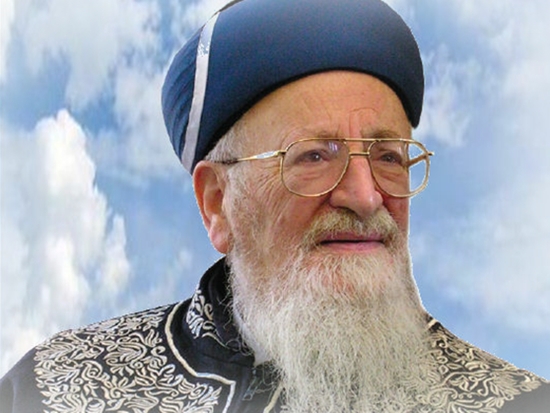
Tomorrow, 25 Sivan, is the Yahrzeit of Rabbi Mordechai Eliyahu zt”l
Rabbi Mordechai Eliyahu, who passed away on 25 Sivan, 5770 / June 7, 2010, was one of the most influential rabbinic voices in modern Israel. He served as the Sephardic Chief Rabbi from 1983 to 1993, but his role in Jewish life stretched far beyond official titles. He was a posek whose rulings guided thousands, a Kabbalist who carried the inner light of Torah, and a leader whose love for the Jewish people was felt in every word he spoke.
He was born in 1929 in the Old City of Jerusalem into a family steeped in mysticism and Torah. His father, Rabbi Salman Eliyahu, was a renowned Mekubal, and his mother was a niece of the Ben Ish Chai, the great 19th-century Sephardic sage. But his childhood was not easy. When Mordechai was just eleven years old, his father passed away. To help his impoverished family survive, the young boy took to the streets of Jerusalem selling cooked garbanzo beans and checking mezuzot for a small fee. Yet even in those years of hardship, he clung to his learning. He later entered the prestigious Porat Yosef Yeshiva, where he studied under Rabbi Ezra Atiyah and quickly became recognized as one of the most brilliant minds of his generation.
His sharp intellect and integrity brought him to the rabbinical courts at an age that stunned the establishment. At twenty-eight, he became the youngest dayan in the history of the State of Israel. His legal clarity and compassion set a new standard, and in 1983, though he first declined, he accepted the position of Rishon LeZion, Sephardic Chief Rabbi of Israel, at the urging of the Baba Sali, Rabbi Yisrael Abuhatzira.
What made Rabbi Eliyahu unique was the way he lived at the intersection of halacha and Kabbalah. Like the Ben Ish Chai before him, he saw no division between the revealed and hidden dimensions of Torah. His books, including Darkhei Taharah on the laws of family purity and his annotated edition of the Kitzur Shulchan Aruch, became foundational texts. But he was not only a writer for scholars. Through the organization Keren Moreshet, he built Torah study groups across the country. His weekly Monday night lecture was broadcast to hundreds of communities around the world, bringing complex ideas into homes with warmth and clarity.
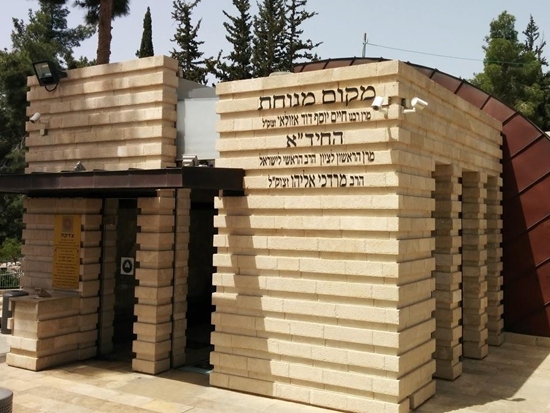
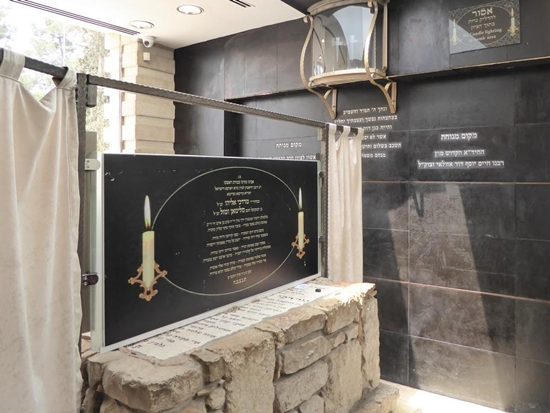
The stories surrounding him are woven into the memory of his generation. In 1960, he was given the responsibility of overseeing the reburial of the Chida, Rabbi Chaim Yosef David Azulai, in Jerusalem. Those present recalled that as Rabbi Eliyahu performed the burial, the bones of the great sage seemed to arrange themselves in the coffin. Fifty years later, Rabbi Eliyahu would be laid to rest on Har HaMenuchot, in a plot directly beside the Chida.
His love for the Land and People of Israel was uncompromising. A leading voice in religious Zionism, he grieved deeply over the 2005 disengagement from Gaza and spent his years calling for Jewish unity and the integrity of Eretz Yisrael. When he passed away at the age of 81, an estimated 100,000 people filled the streets of Jerusalem to accompany him to burial.
His legacy did not end that day. It lives on through his students, through his son Rabbi Shmuel Eliyahu, Chief Rabbi of Safed, and through the countless homes still shaped by his teachings. Today, on his Yahrzeit, 24 Sivan, that legacy is also carried in public service: his grandson, MK Avichai Eliyahu, serves as Israel’s Minister of Heritage.
May his memory be a blessing.
זכר צדיק לברכה